
❋
GROWN IN GOOD COMPANY.
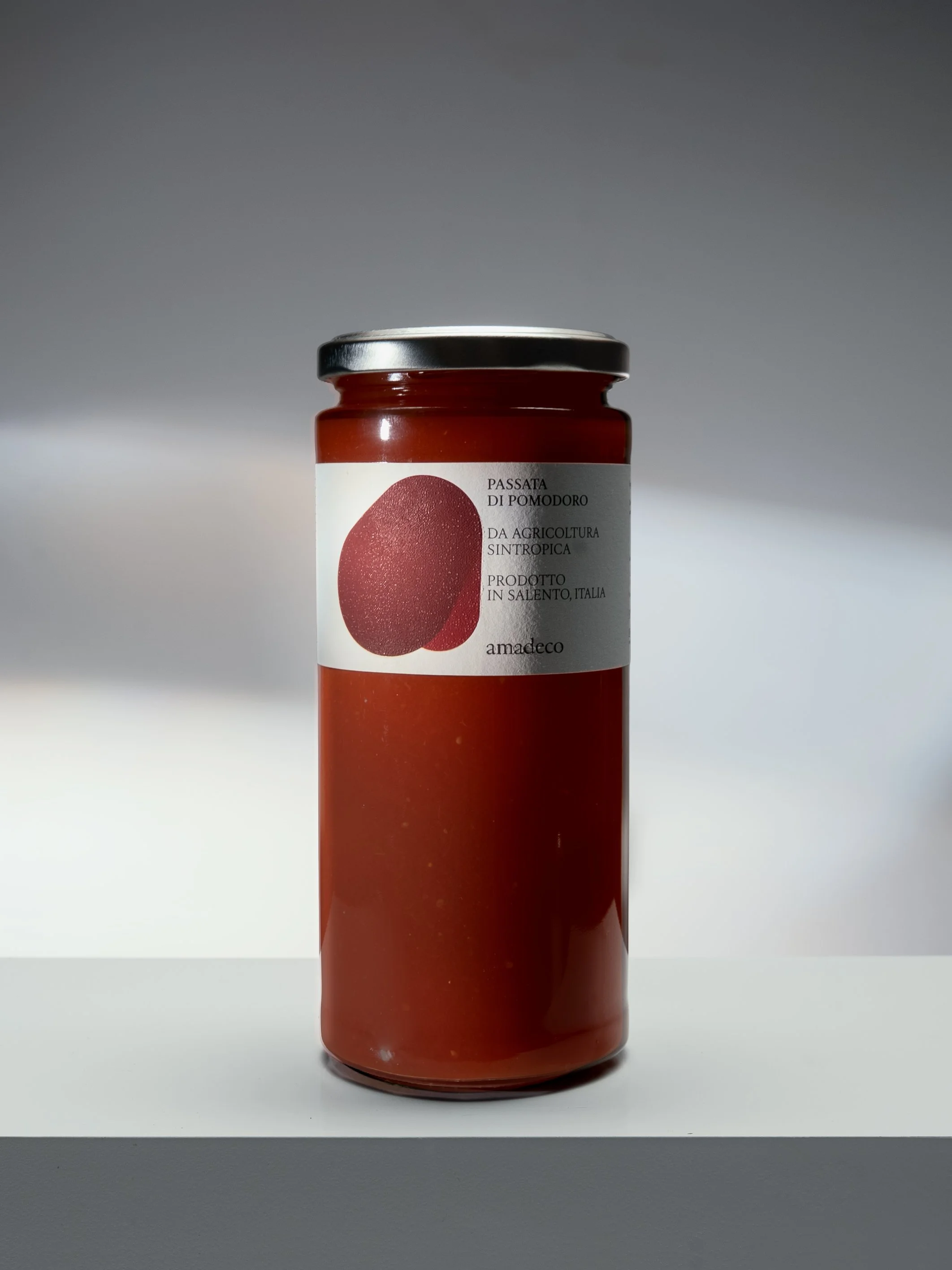
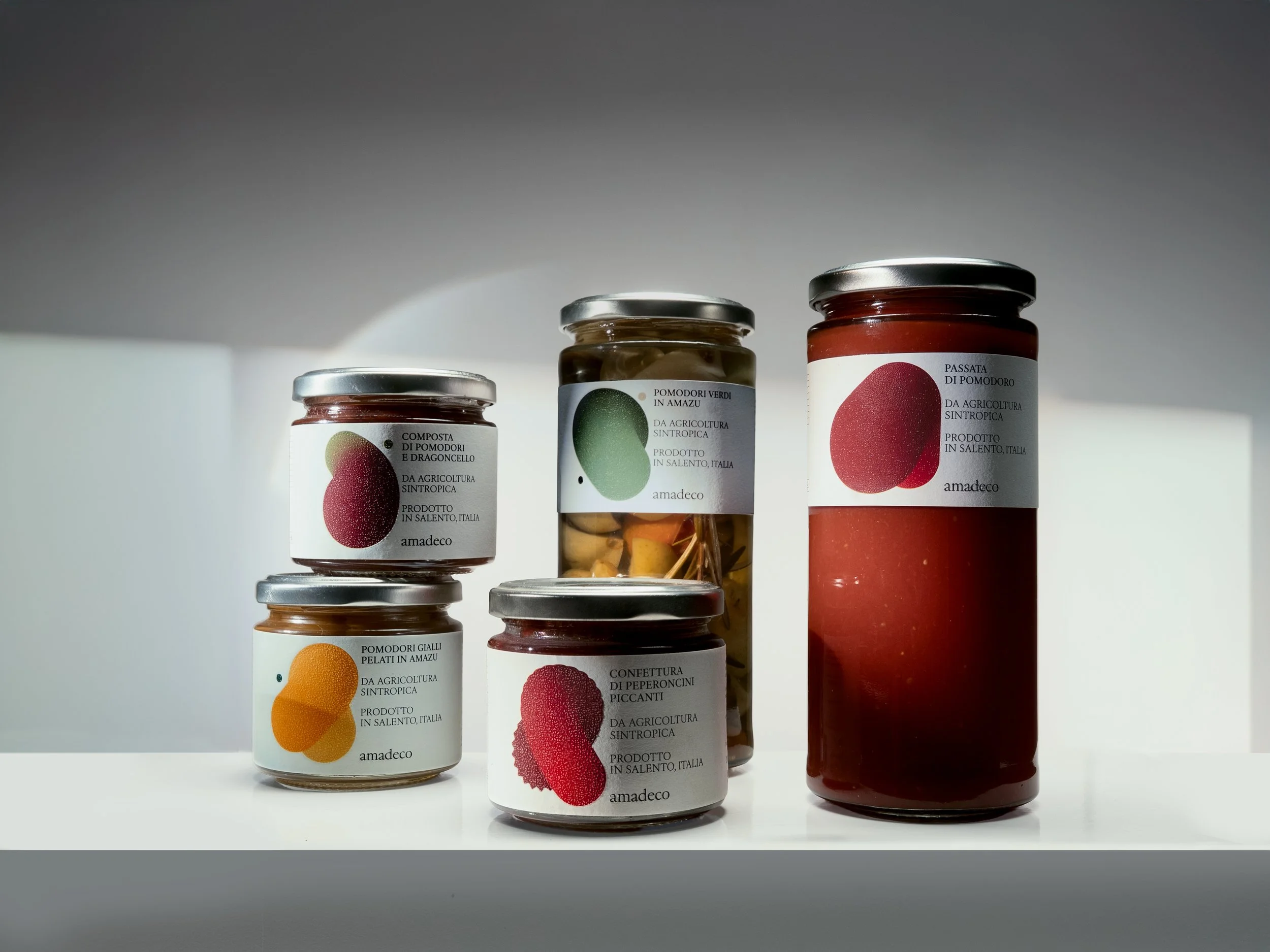
Tomatoes grown, harvested at full ripeness, cooked and preserved — nothing else. Every variable of production is removed; what remains is solely what the field produced.
Our tomatoes grow in a layered system — aromatic plants, woody species, vegetable crops in succession — where each element contributes to the fertility of the soil that nourishes the next. This is not a method that adds something to the tomato. It is a system that takes nothing away from the plant.
What you open in December should taste unmistakably of August in Salento.
Ingredients: Tomato 100%
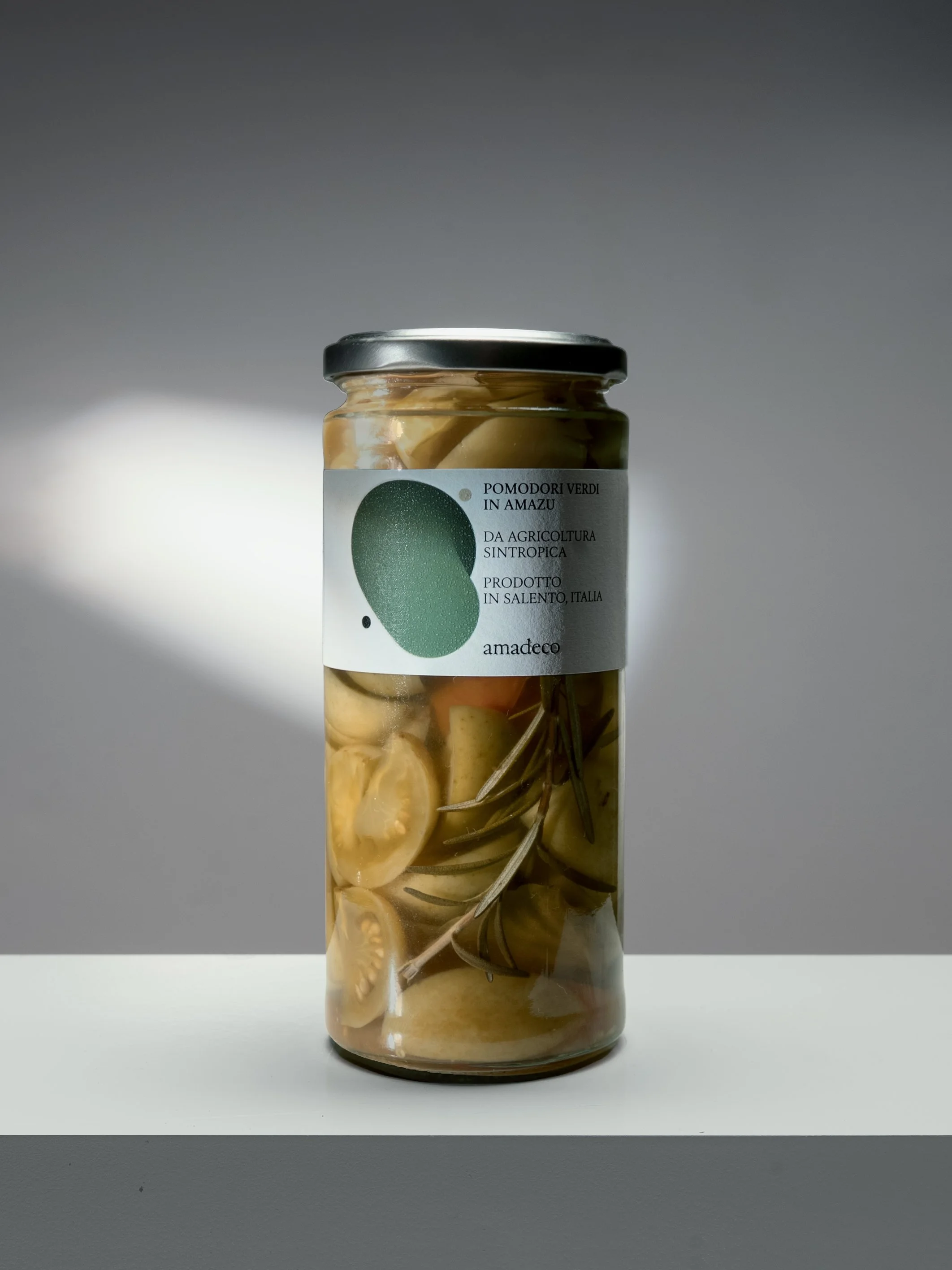
The green tomato is the fruit before its transformation: tannic, bright, with an acidity that ripening would have dissolved. We harvest these deliberately, at the right moment in the seasonal cycle, when the plant has exhausted its productive drive and the green has reached its own completeness.
Amazu is a Japanese preservation technique built on vinegar, sugar and salt — developed to clarify ingredients, not to transform them. Applied to the green tomato, with garlic, bay leaf and rosemary from our field, it produces something that belongs to both traditions without being reducible to either: an agrodolce with the structure of the Salento orto and the precision of a centuries-old technique.
Sliced thinly in salad, alongside braised meats, or as a sharp counterpoint to anything that requires one.
Ingredients: Green tomatoes 50%, vinegar, sugar, salt, garlic, bay leaf, rosemary
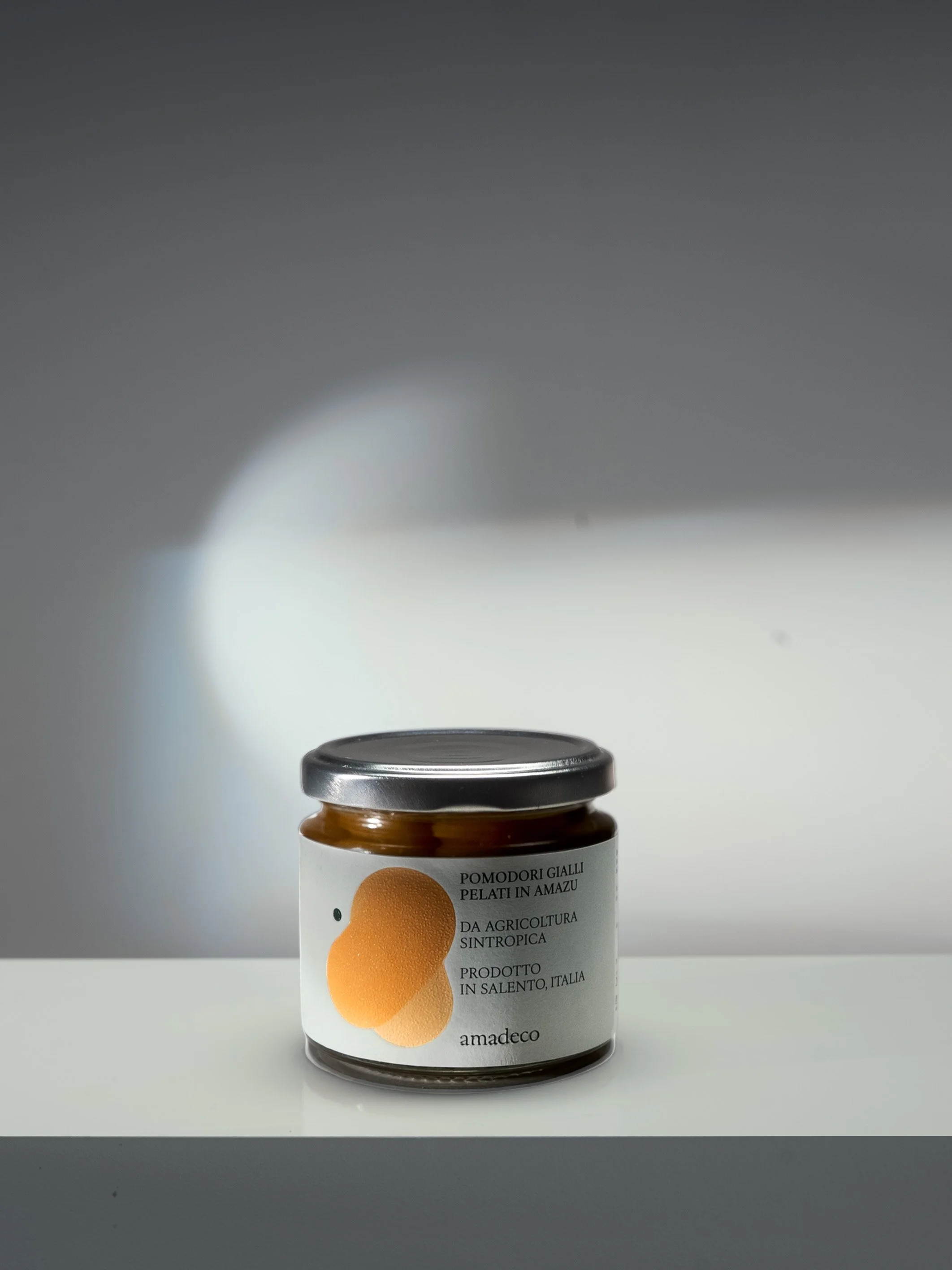
Amazu is a Japanese preservation technique built on vinegar, sugar and salt — refined over centuries not to alter ingredients, but to render them more precise. We apply it here to the yellow tomatoes of our field: a variety of restrained acidity and pronounced floral character, harvested when the season has accumulated everything it had to offer.
The tomatoes are peeled, left whole, submerged in a brine with vinegar and fresh basil. The result belongs entirely to neither tradition — Salento terroir, Japanese technique, a flavour that requires no further explanation. With burrata, added to a cold broth, or directly from the jar.
Ingredients: Yellow tomatoes 50%, vinegar, sugar, salt, basil.
❋
I NOSTRI PRODOTTI
Look closely enough at our fields, and the old language stops making sense. A weed is not a weed — it's a spontaneous herb, arriving to do its job. A Eucalyptus is not a water thief — it's a soil driller, breaking ground so others can take root. Artemisia, wisdom says, nothing can grow near it. Our fields disagree. Around every Artemisia plant, a small community of plants gathers.
We farm guided by the principles of Syntropic Agriculture — succession, stratification, active management — and we are still learning what they have to teach us. In five years: increased organic matter, better water retention, and our produce increasing in nutrient density.
That nutritional potential begins underground. Plants return between 5 - 21 % of the sun's energy back into the soil through their roots, feeding the bacteria and fungi that feed their neighbours in turn. Not competition. A conversation.
With over 200 species, 25 plant families. Olive and fruit trees above, lavender, rosemary, sage, thyme, saltbush, artemisia, vegetables below.
Nothing at Amadeco grows alone.
And we think you can taste it.
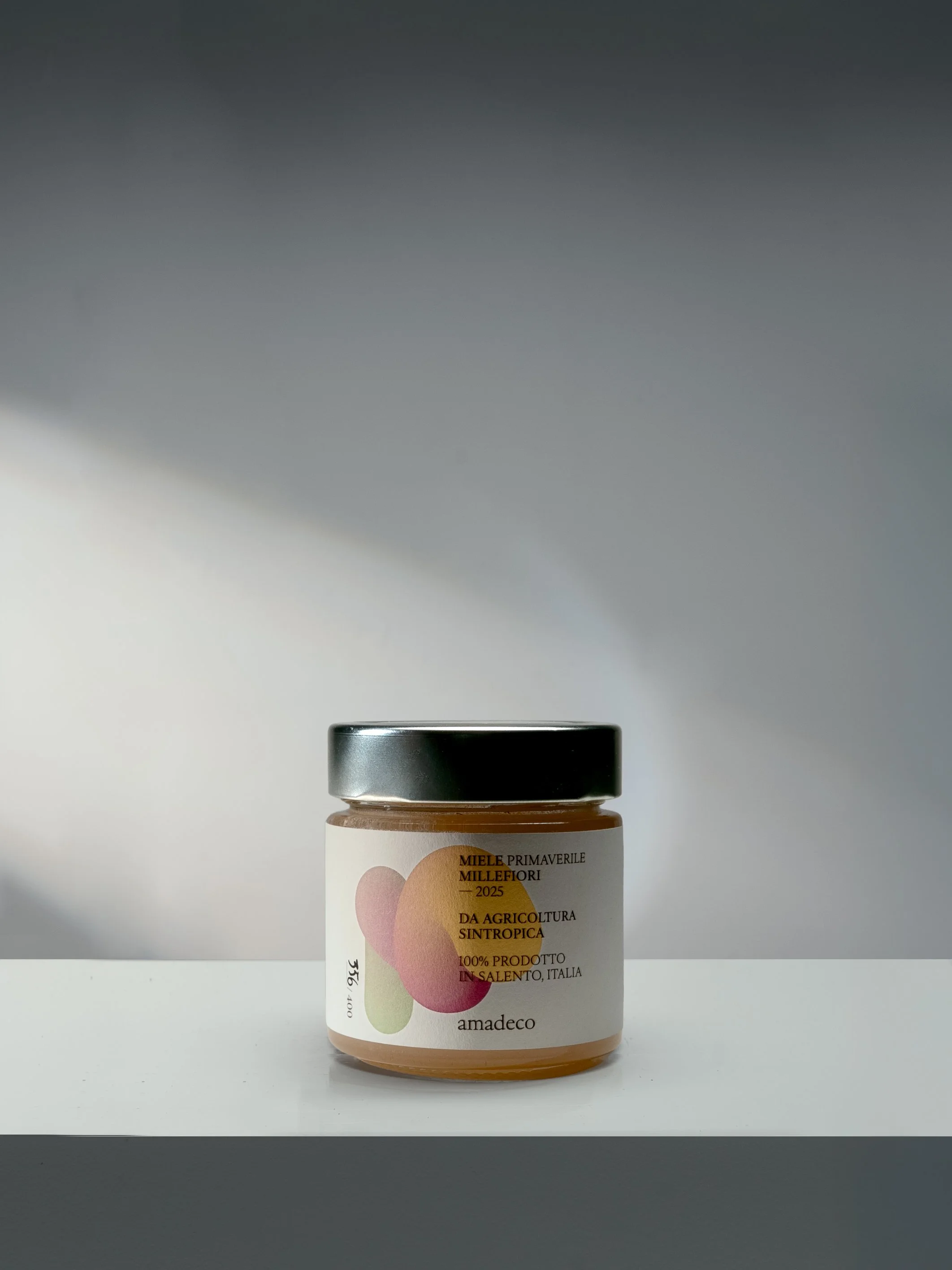
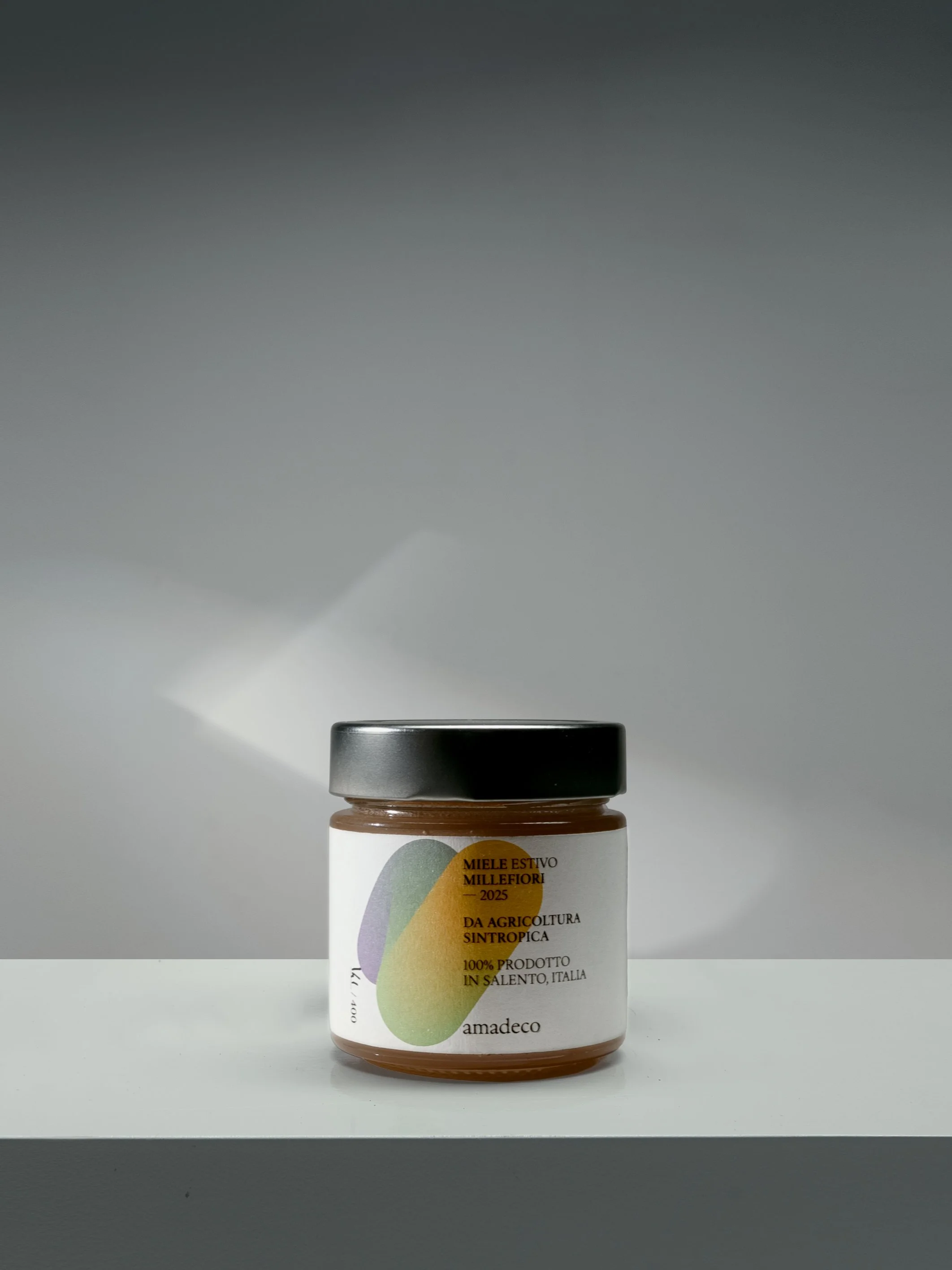
Miele Millefiori Amadeco
Da agricoltura sintropica, Salento, Italia.
Primaverile — Floral and delicate, from the first spring blooms.
On yogurt, fresh cheese, warm bread, or straight from the spoon.
Estivo — Richer and more intense, from the height of summer.
With aged cheese, dark bread, a drizzle over fruit, or dissolved in a cup of tea.
❋
SPRING AND SUMMER HONEY.
Our bees forage across a field planted to work as a community: olive and oak, fruit trees in bloom, lavender, lentiscus, artemisia and the wild herbs that grow between them. Each plant flowers in its turn, and the bees follow.
Collected by hand. Left unheated.
Jarred as it came from the comb.
Golden. Rounded. Over warm bread, alongside aged cheese, or melting slowly into a cup of something hot.