 Image 1 of 1
Tarragon does not belong to Salentine cooking. In the gastronomic imagination, it belongs to the French tradition — herbaceous, anise-like, insistent. At Amadeco, it grows in the same rows as the tomatoes, not as an ingredient but as a companion plant: it contributes to microclimate regulation, to soil structure, to the composition of what grows alongside it.
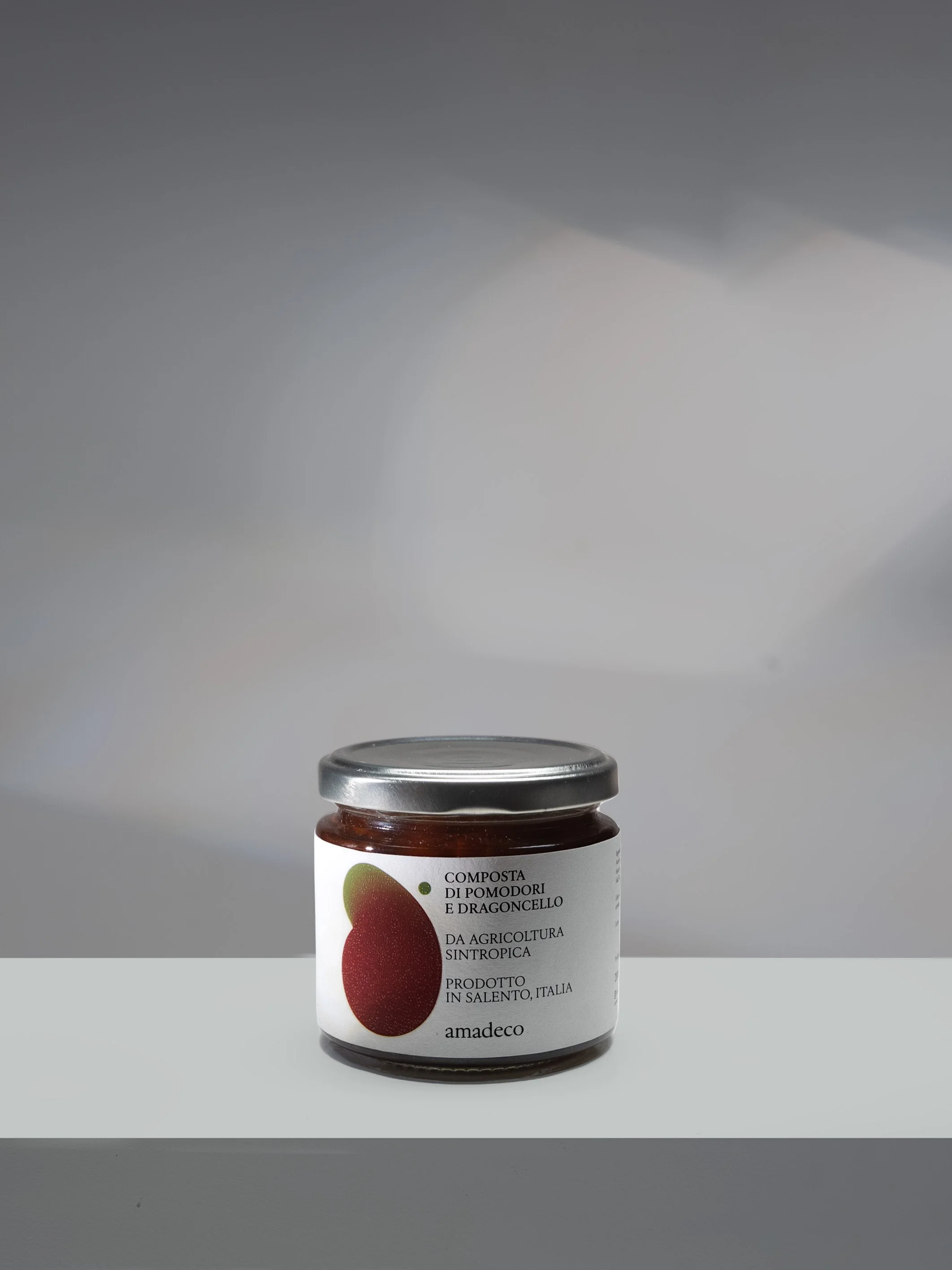
The same rosemary that grows in the orto enters the composta with it. The result is a long, slow cook — 70% ripe tomatoes, apple cider vinegar, cane sugar, lemon juice — in which the tarragon does not dissolve into the background but sustains the sweetness of the tomato and carries it somewhere unexpected.
With aged cheeses, white meats, or on toasted bread as the element in a dish that needs a point of tension.
Ingredients: Tomato 70%, sugar, apple cider vinegar, hot pepper, lemon juice, tarragon 0.01%, salt, rosemary.
Tarragon does not belong to Salentine cooking. In the gastronomic imagination, it belongs to the French tradition — herbaceous, anise-like, insistent. At Amadeco, it grows in the same rows as the tomatoes, not as an ingredient but as a companion plant: it contributes to microclimate regulation, to soil structure, to the composition of what grows alongside it.
The same rosemary that grows in the orto enters the composta with it. The result is a long, slow cook — 70% ripe tomatoes, apple cider vinegar, cane sugar, lemon juice — in which the tarragon does not dissolve into the background but sustains the sweetness of the tomato and carries it somewhere unexpected.
With aged cheeses, white meats, or on toasted bread as the element in a dish that needs a point of tension.
Ingredients: Tomato 70%, sugar, apple cider vinegar, hot pepper, lemon juice, tarragon 0.01%, salt, rosemary.